

Reading time — 10 min.
10773
One group photograph or separate photos
A family portrait starts with the people’s photographs, not the background. A good group photo may already capture the poses and mood you want. If you do not have one, the first step is to assess whether separate pictures can work together in a single drawn scene.
A group photograph is useful when every face is clear, everyone likes their expression and nobody is caught awkwardly in motion. If one person has their eyes closed, an extra photograph may help the artist understand their appearance. Whether a replacement will work depends on the actual source images.
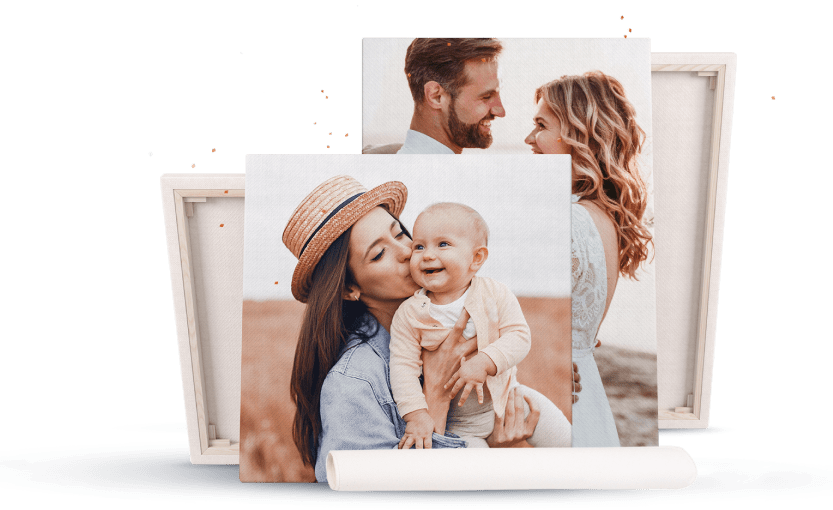
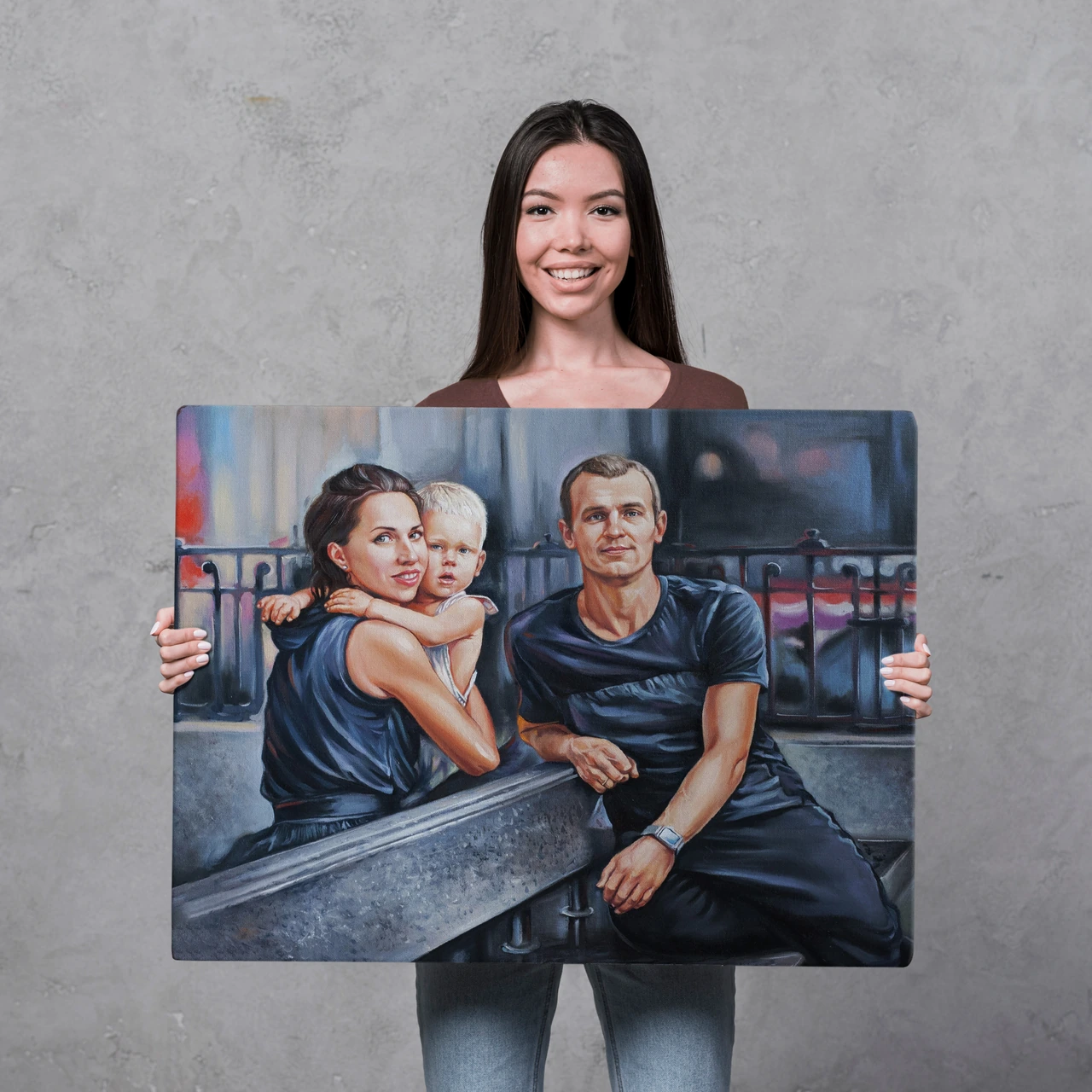
In a unified drawn portrait, people share a composition with coordinated scale and lighting. In a photo collage made from separate pictures, the photographs remain individual frames. A collage may suit the idea better when different occasions and their original settings matter.
Choosing a photograph of each person
Choose one main photograph of each person, with an additional reference if needed to clarify their appearance. Say which photo has the expression you want to keep, rather than leaving the artist to choose between several smiles and angles.
- Facial detail and focus. Enlarge the photograph and look at the eyes, nose and edges of the lips. A face should not be a tiny part of a much larger scene. File size in kilobytes alone does not establish image quality.
- Camera angle. Photographs taken at similar camera heights and with compatible head angles are easier to assess for a shared scene. A selfie from above and a full profile reveal different information.
- Expression. Choose a familiar look or smile. Everyone need not smile identically, but their expressions should fit the intended mood.
- Lighting. Look for visible features without deep shadows or washed-out highlights. Strong light coming from opposite directions on different faces makes a convincing combination harder.
- Original files. Send the original camera or phone file when available. Screenshots and repeatedly shared copies may lose detail, while heavy filters can obscure someone’s appearance.
If a photograph is unsuitable, look for another or take a new one in soft daylight. A careful scan can help with an old paper photograph. If a new photograph is impossible, show the available options before settling on the composition: a different angle or a simpler arrangement may be necessary. Not every set of pictures can be convincingly combined.
Who to include and how to arrange the group
List everyone to include, including children, older relatives and pets. State the age at which each person should be shown and identify details to preserve, such as glasses, a hairstyle or an animal’s distinctive markings.
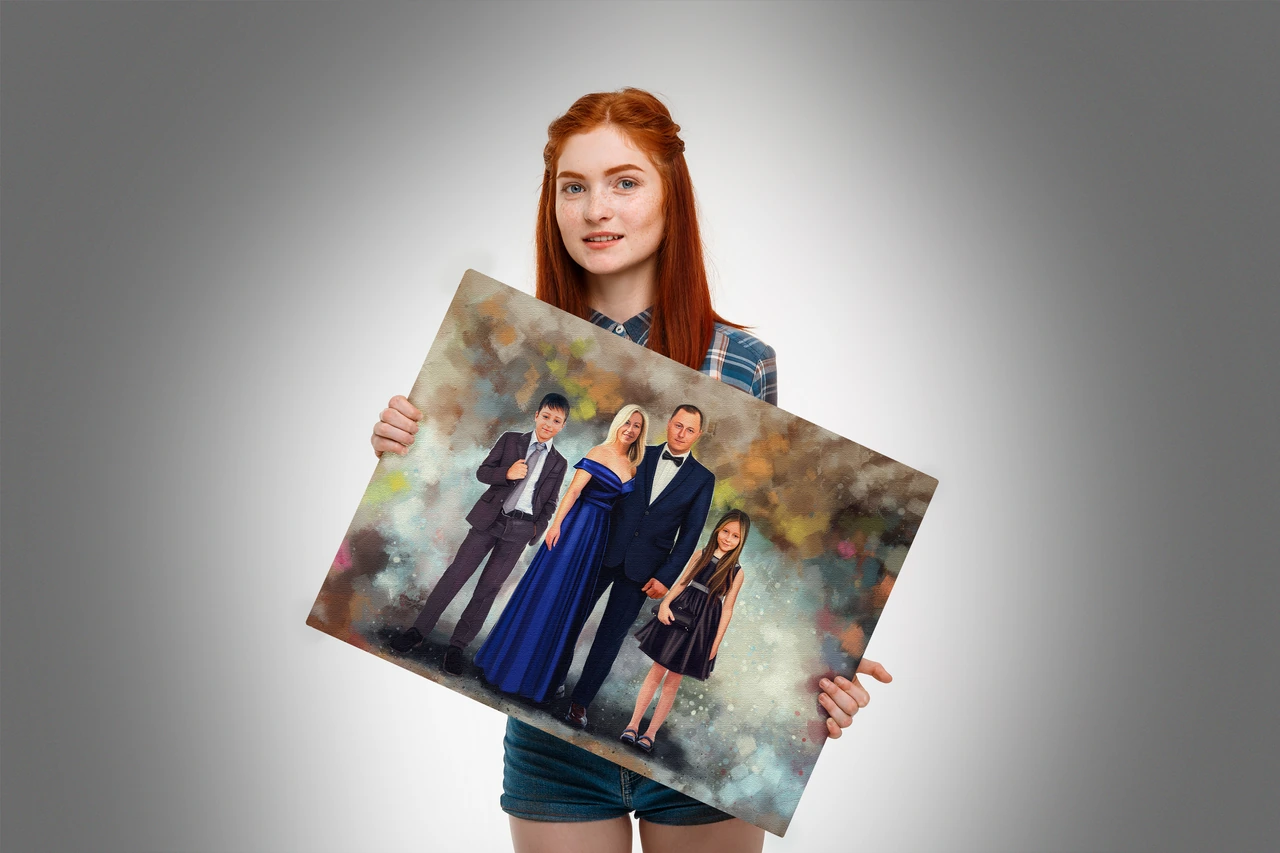
Describe positions from the viewer’s left to right. For example: adults behind, children in front; grandparents seated in the centre, others alongside. Explain who is taller in real life, who should sit or stand, and how close people should be. The size of a head in a source photo should not automatically dictate its size in the final portrait.
Leave room above heads and around the edges. Faces should not obscure each other, and the background should support the group. Discuss the format early for a large family: fitting more people into a small picture means smaller faces. For the artistic treatment, see the guide to choosing a portrait style as a gift.
Naming files and writing a clear brief
Use clear filenames such as “mum_main”, “dad_main”, “daughter_smile” and “son_extra”. Include a left-to-right list of names for a group photo. If you send similar alternatives, mark the main reference.
A brief could read: “Four people, parents behind and children in front. Keep Dad’s glasses and our daughter’s smile from her main photo. A light, quiet background, without wording. We would like a landscape portrait and will discuss the final size once the composition has been assessed.”
See examples and available options for a family portrait from photographs. A digital drawing, its printed version and any additional finish are separate stages. A painterly appearance does not mean a hand-painted oil painting; materials, presentation and timing should be confirmed for the selected version.
Two family composition examples
These are hypothetical situations, not accounts of completed customer orders.
A family of four with different source photographs
The mother and daughter have clear window-lit photos, the father appears in a dark profile shot, and the son looks good in a school group photograph. First, find a more compatible angle for the father and check the detail of the son’s face in the original school photo. The proposed arrangement puts the parents behind and the children slightly forward, without making everyone the same height. Settle on the final layout after the sources have been assessed.
A portrait spanning several generations
The grandparents appear in an old photograph together, while the children and grandchildren have recent individual pictures. Confirm whether each person should retain the age shown in their chosen photo. One option is to place the older generation in the centre and others alongside, identifying family groups and preferred poses. If the older faces are tiny or damaged, discuss the limits of restoration first. Keeping the original photographs as separate parts of a collage is another option.
Checking the family portrait proof before printing
Once the artist has prepared the group proof, check that everyone is included, each person is recognisable and the intended ages are represented. Then assess relative scale, natural poses, hands, spacing and room around the edges.
If there is wording, check names, dates and text placement separately. Discuss one current version and combine the family’s comments into a single list. The detailed guide to checking the finished portrait before printing concerns the completed drawing; source-photo quality should be assessed earlier.
Clear reference photographs, an accurate list of people and a specific arrangement turn a collection of faces into an understandable brief for a shared family portrait.