


Reading time — 8 min.
169
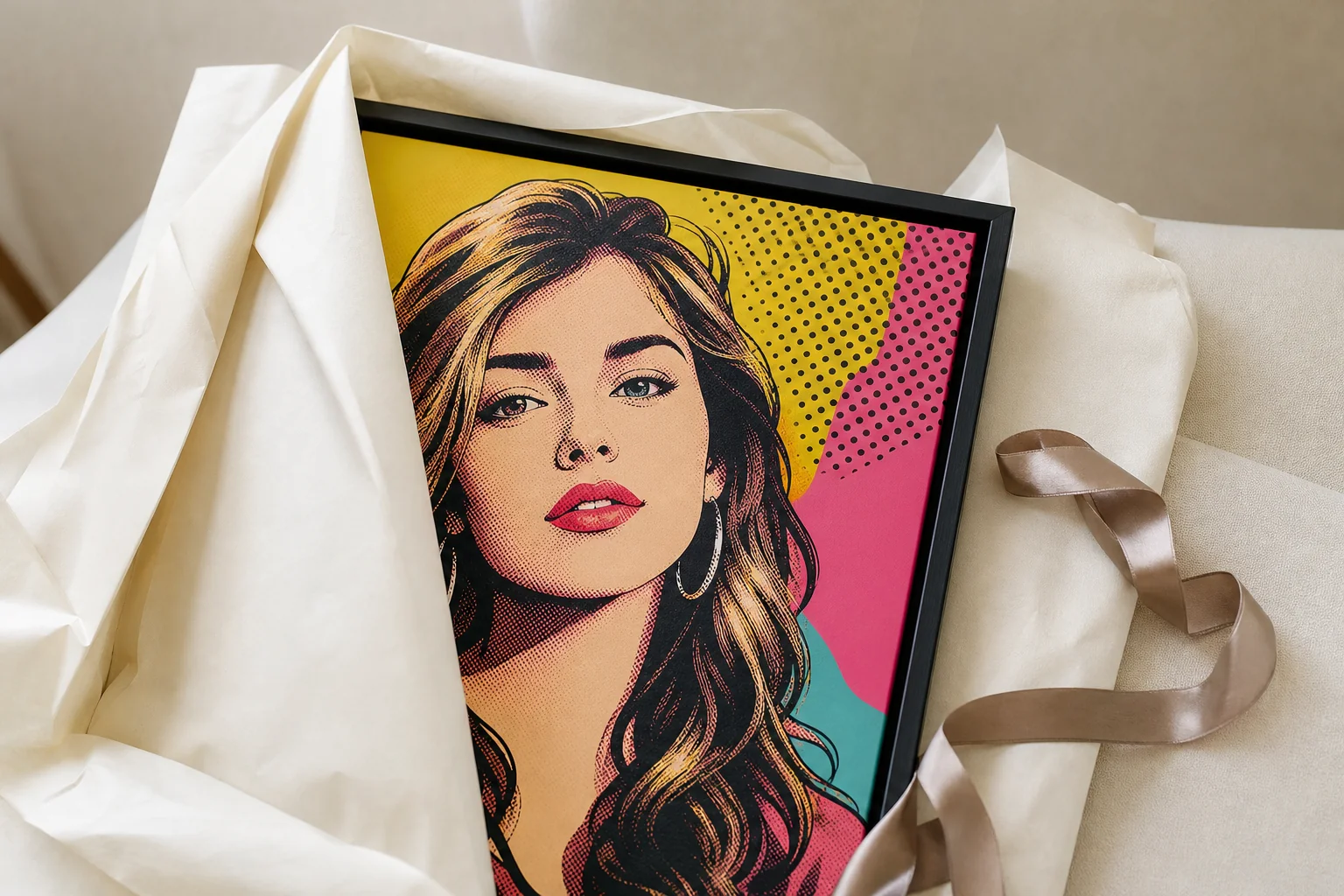
A Pop Art portrait from your photo transforms a familiar face into a striking decor statement, able to define the atmosphere of a whole room. To ensure the portrait fits harmoniously into your interior, consider the palette, scale, placement, and what you communicate to the artist. Here you’ll find step-by-step advice to help you make your portrait order successful, whether it’s for your home or as a gift.
Where to display a colourful portrait
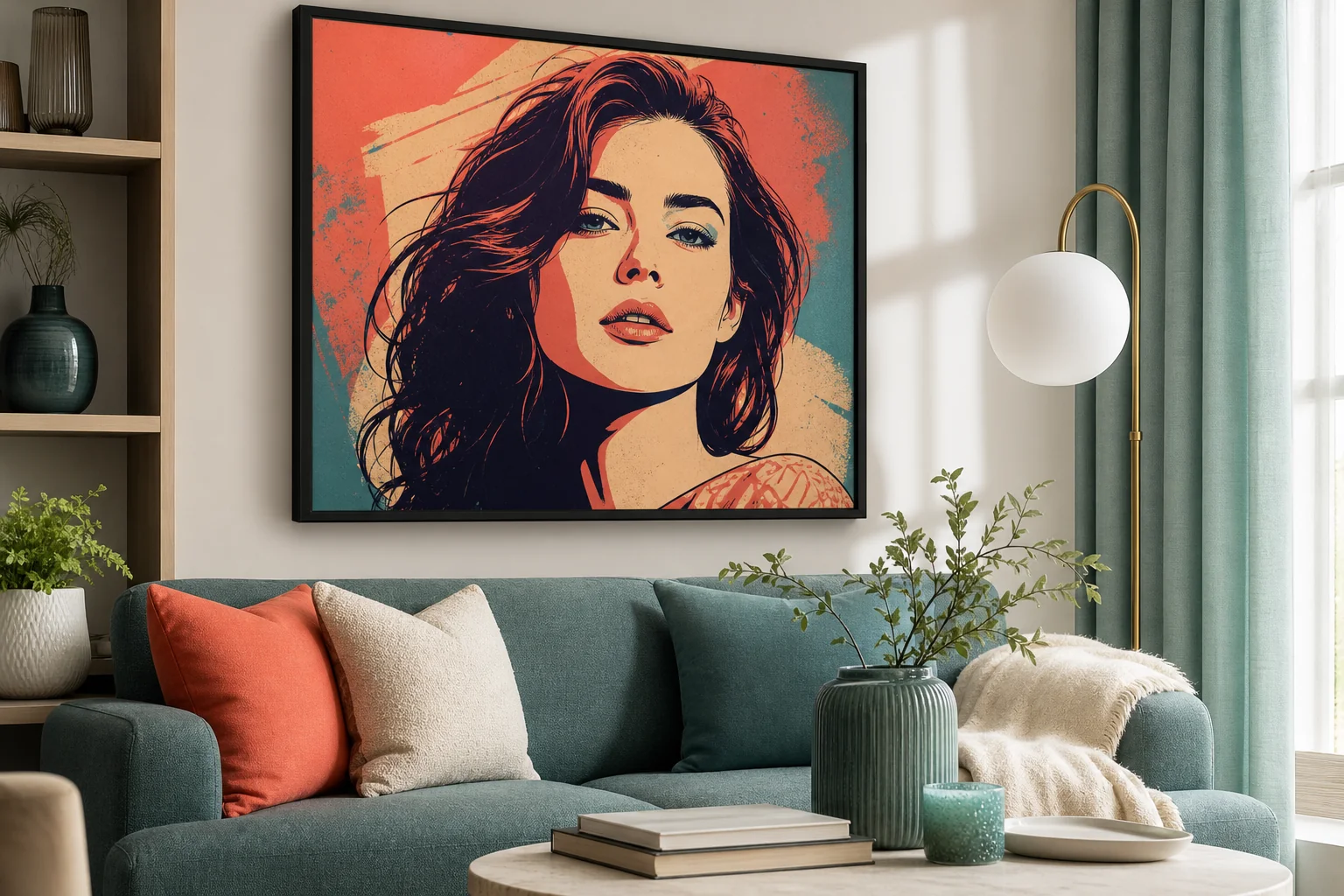
A Pop Art portrait is always attention-grabbing, serving as a statement piece rather than background decor. For maximum impact, choose a wall space with room to ‘breathe’, such as above a sofa, sideboard, or in a home office corner.
In a calm living room, maintain balance—a single large portrait on a neutral wall works best if there are no competing details. This draws the eye and makes a unique impression without disrupting the whole design.
In a colourful interior, consider contrast: placing the portrait against a light or neutral background, or among accents that echo its colours, helps the art stand out without clashing.
For a home office or compact nook, a small Pop Art portrait on a bookshelf or desk brings life and dynamism without overwhelming your work environment.
Choosing a colour palette
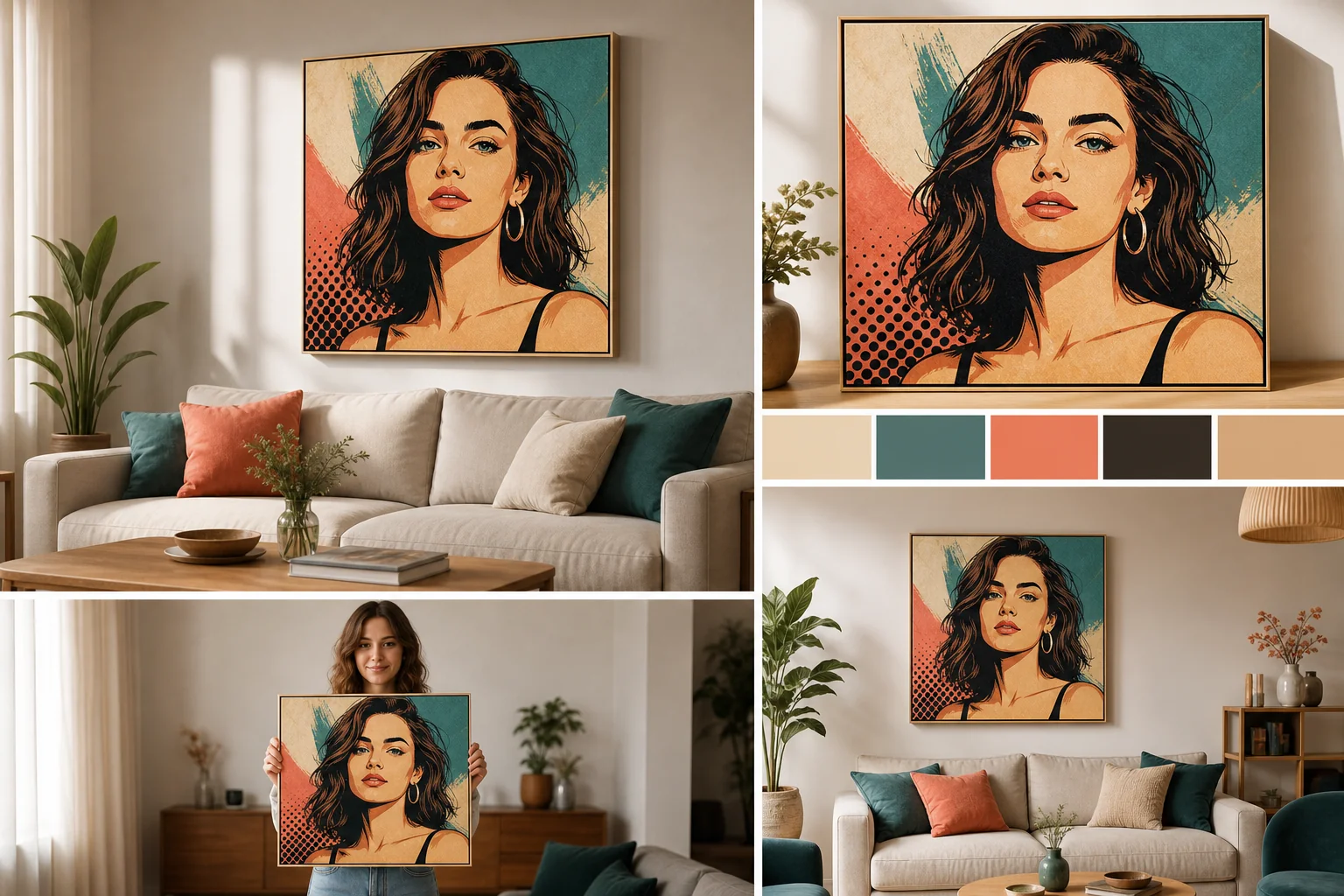
The portrait’s palette can either support a restful mood or boost a lively atmosphere. For classic or muted interiors, opt for subdued tones—warm browns with highlights of apricot, ochre, or dusty teal. Bright, modern spaces can accommodate bolder choices: purples, lemon yellow, pinks, or vibrant blues. The key is that at least one color in the portrait connects visually with decor in the room.
Practical tip: Hold a piece of fabric or an accent object in your chosen colours up to the intended wall. Step back and make sure the combination feels harmonious—not overly busy or washed out.
If you’re unsure, share a photo of your room with the artist, and mention the main interior colours (‘please match the teal from the cushions and the sandy wall’). This helps ensure your portrait feels right at home.
Size and placement on the wall
Before ordering, define how much space you have. A useful method is to tape sheets of paper to the wall at the estimated borders of the future portrait—this lets you visualize the scale and check if it’s well-proportioned for the wall, or at risk of being lost or overly dominant.
In spacious living rooms, a medium-to-large portrait usually looks best (roughly two-thirds the length of the sofa or a bit larger). In smaller rooms or workspaces, a single, elegant piece is ideal. Leaving generous space around the artwork has a contemporary, upscale feel and helps the portrait breathe.
Also consider alternative placements: vertical pieces can be striking by a doorway or window, while squares look great above a sideboard or on a section of wall. Choose dimensions that keep the portrait’s silhouette clear—even from a distance.
Choosing a suitable photo
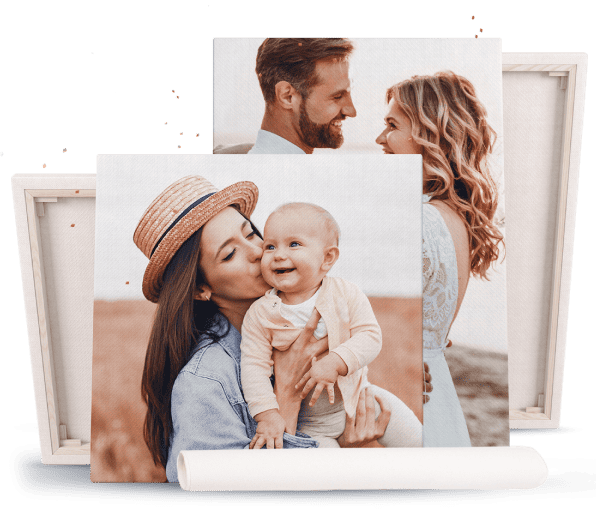
The better the original photo, the more effective the final artwork. Ideally, select an image taken in natural daylight, with neutral clothing and minimal shadows on the face. An open, natural expression—like a friendly smile—tends to make portraits feel approachable and fresh.
For group or couple portraits, ensure every face, hand, and shoulder is clearly visible, and that the angle doesn’t distort proportions.
It’s helpful to add a short description with the photo: the mood or spirit you want to convey, any personal details or favourite colours that matter for the design. This lets the artist tailor the style to match your vision.
What to include in the artist brief
A well-prepared brief leads to a smoother process and fewer revisions. For a clear brief, include:
– A link to or the original photo(s);
– Your preference for style—whether you’d like something bold and vibrant, or a bit more understated;
– Colour guidance (e.g., ‘please use teal tones from our living room, but avoid pure red’);
– Information about where the portrait will hang or the desired format (‘above the desk’, ‘gift for a woman’, ‘home office’);
– Any special notes about mood (‘friendly’, ‘serious’, ‘romantic’).
For detailed suggestions, visit the pop art portrait page.
A checklist before ordering
1. Assess your intended wall space and mark out a paper mock-up of your preferred size.
2. Check your room’s dominant colours and select supporting accents for harmony.
3. Choose a clear, lifelike photo.
4. Write your brief, covering colours, format, and context (gift, workspace, living room).
5. Review actual examples of finished portraits in interiors to help picture the result.
6. Discuss specifics with your artist, and confirm a final sketch or draft before the artwork begins.