

Reading time — 9 min.
408
Choosing a plot for a caricature drawn from photos is the first and most crucial step toward a meaningful and funny gift. The plot becomes the core of the artwork—whether it's a playful take on a friend’s hobby, a couple’s shared adventure, or a colleague’s work superpower. This guide breaks the process into manageable steps, gives artist brief examples, and outlines humor boundaries and the essentials you’ll want to cover.
Is a Caricature the Right Gift?
Consider if the recipient would genuinely appreciate a humorous depiction. Caricatures work best for people who enjoy self-irony or lighthearted fun about their quirks and passions. Avoid themes that could embarrass, such as jokes about age, weight, or private mishaps—especially for gifts opened in company. Focus your idea on their achievements, well-loved interests, or shared joyful moments.
How to Select a Central Theme
The strongest caricatures tell a story at a glance. To find your plot:
- List the recipient’s favorite activities or personality highlights
- Recall a memorable occasion you shared
- Choose one main idea that sums up your approach (as a single, playful sentence)
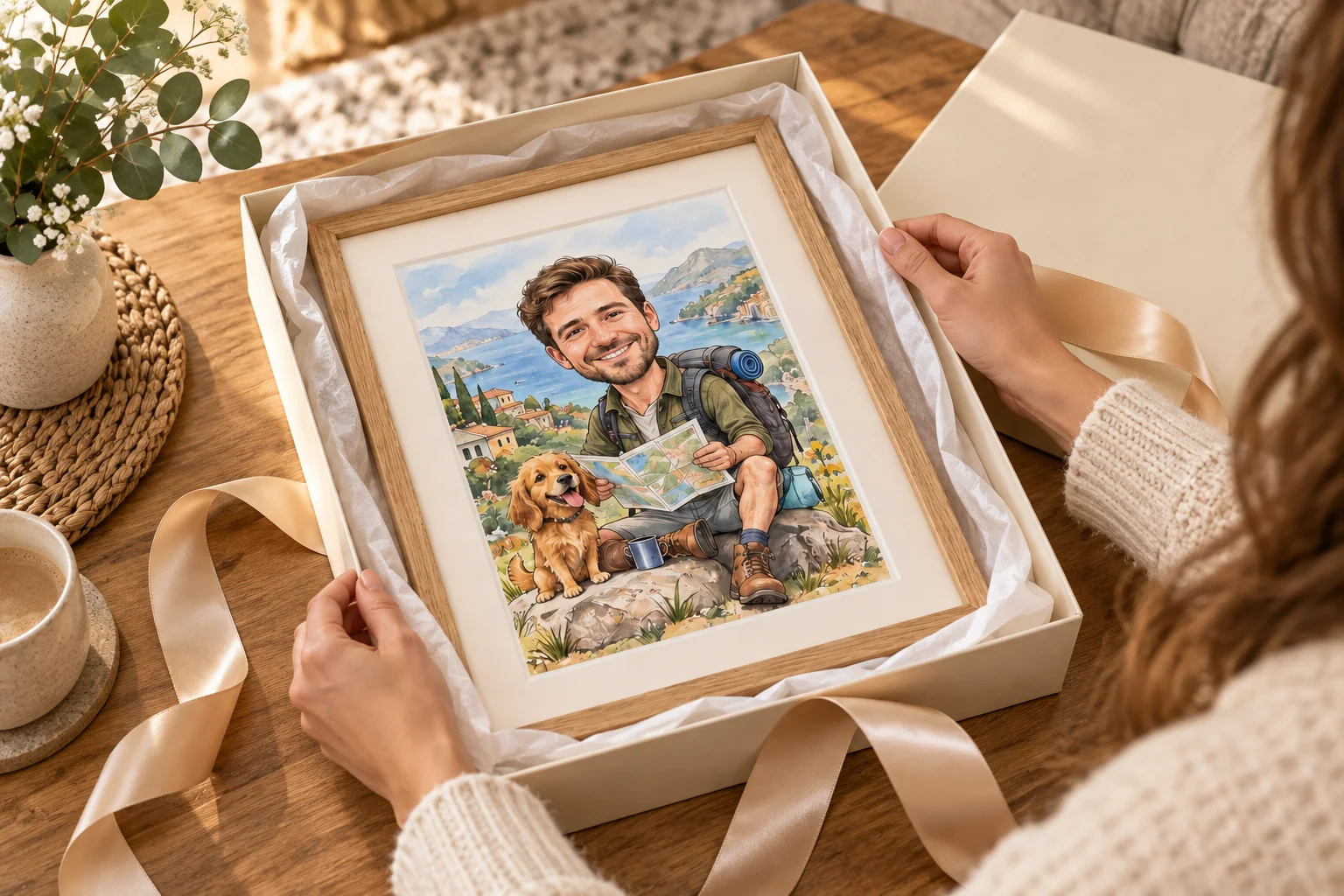
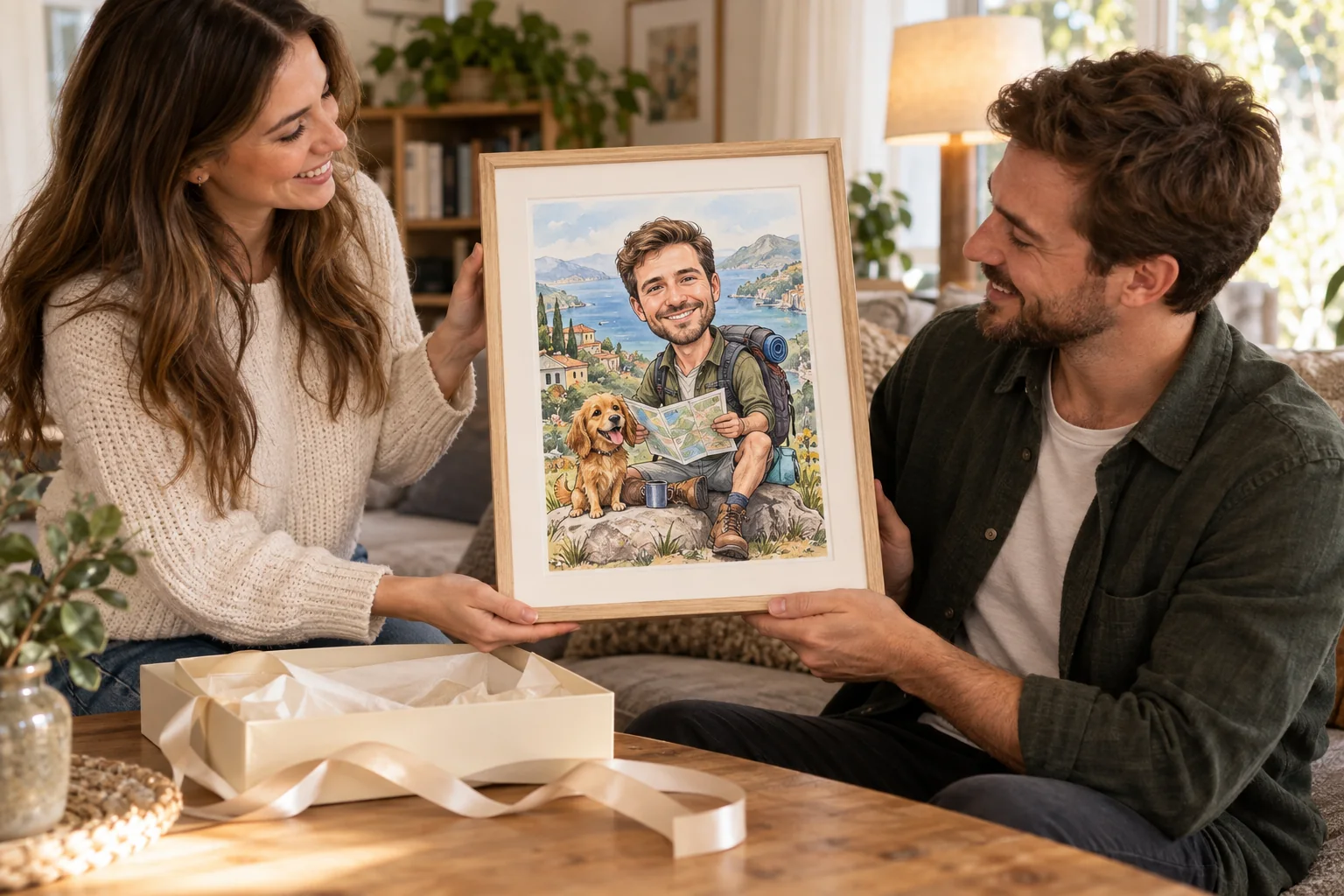
Example: “Our friend is such a traveler, we joke he could get lost even in his own kitchen while reading a map.”
Stick with one main theme; extra hobbies, props, or background details can gently reference other interests but shouldn’t overcrowd the core story.
Fictional Scenario Ideas
For a friend
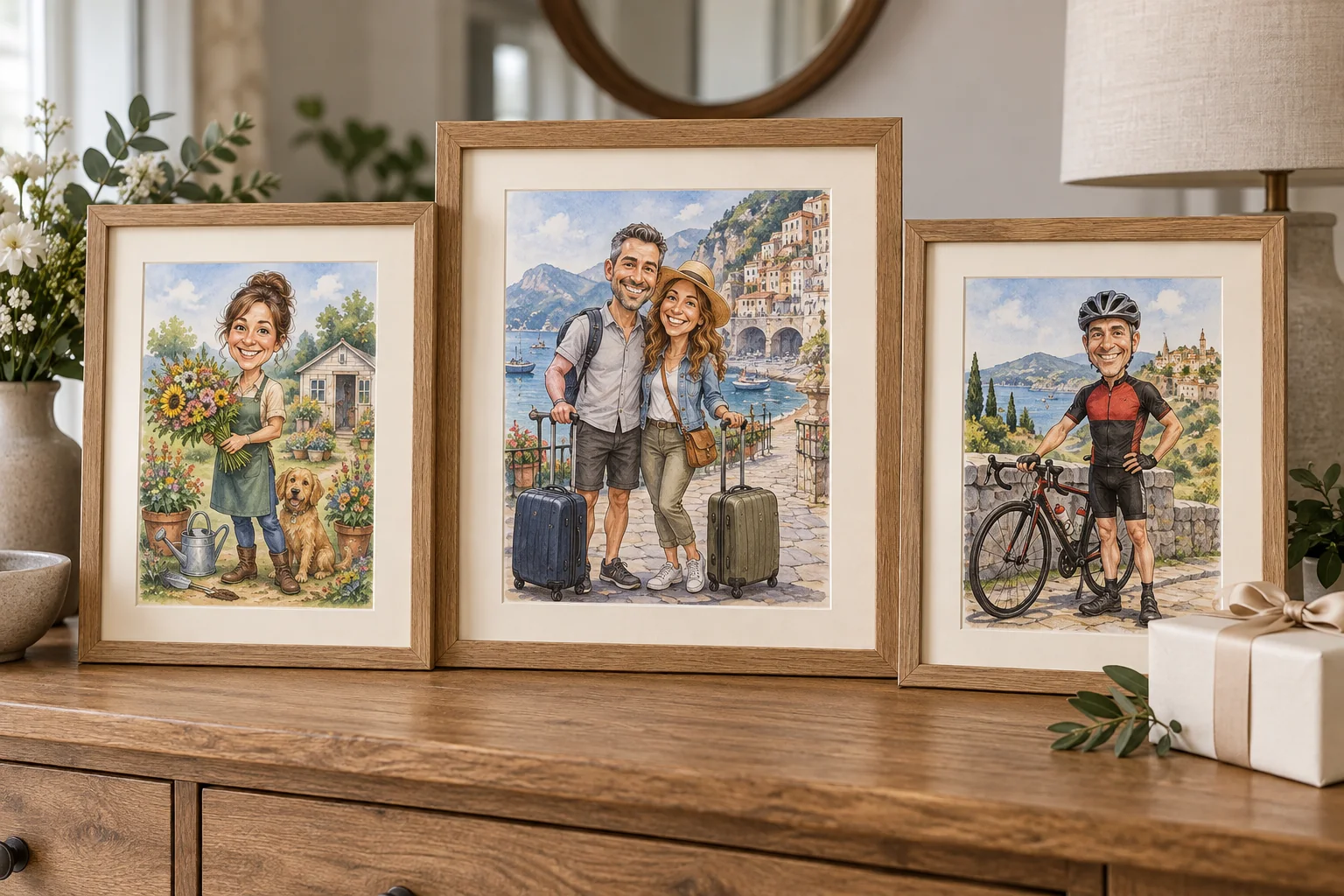
Imagine Lucia, a passionate gardener, presenting a bouquet of carrots to her party guests, dressed as a superhero. Or Max, an avid cyclist, climbing a steep hill alongside his dog sporting aviator sunglasses.
For a couple
Picture Marta and Tomas revisiting the seaside town from their first holiday, both hauling oversized backpacks and balancing melting ice creams. For anniversaries, you might choose their home kitchen, portraying them in a salsa dance-off.
For a colleague
Visualize Viktor, the dependable project manager, juggling armfuls of coffee cups, sticky notes, and a laptop, while assembling the "meeting of legends"—discreetly sidestepping in-jokes about office politics.
In group caricatures, clarify each person’s role, and avoid putting all the spotlight (or exaggeration) on one individual—unless specifically requested.
How to Select Suitable Photos
Good photo selection lets the artist capture likeness and character. Photos should:
- Show the face clearly, with even lighting and no strong shadows or distortion
- Depict a genuine, recognizable expression
- Be high enough resolution to show details (originals are better than screenshots)
If one image has the right smile but another best shows hairstyle or glasses, mention this; the artist can blend details with clear notes. For groups, provide labeled individual photos and specify who’s who.
People do not need to be together in all photos. If merging solo photos into a group scene, describe each intended pose or connection in your brief.
How to Write a Practical Brief for the Artist
A clear brief keeps the result fun for everyone. Checklist for your artist message:
- Who is in the caricature and the intended recipient
- Occasion and ideal timeline (if relevant)
- Main story in a sentence
- How playful or gentle the humor should be
- Must-have items: clothing, props, places, backgrounds
- Any topics or visual jokes to avoid
- Any preferred text (dedication, caption, or none)
- Where the artwork will be displayed (framing, room, etc.)
Sample artist brief:
Gift for friend’s birthday. He loves cycling and his dog Max. Scene: him holding a route map, Max next to his backpack. Please make the likeness clear, humor gentle—not too exaggerated. Don't mention age or hair changes. No text. Artwork will hang in the living room; I welcome framing advice.
Discuss size, style, and number of people with the artist in advance—they all influence the composition. When your idea and reference photos are ready, explore custom caricatures from photos and discuss your brief with the artist.
Reviewing Your Sketch: What to Check
When you get your caricature sketch, check first for likeness and authentic expression. Next, see if the scene and key elements (clothing, props, group composition) match your vision. If others are involved in decision-making, collect all feedback into one message—consolidating avoids conflicting requests and makes your feedback easier to follow.
FAQ: Your Top Questions Before Ordering
- Do I need a group photo for a couple caricature?
No—individual photos work. Just describe how they should appear together. - What if we do not want jokes about appearance?
Ask for gentle stylization, and place humorous touches in the scene’s plot or props. If you prefer a portrait without exaggeration, consider alternative portrait styles instead. - Can I avoid job or hobby themes entirely?
Certainly. Choose a memorable event, place, or tradition instead—any theme meaningful to the recipient. - How do I get started?
Gather your best reference photos and summarize the core idea. Talk over options, display needs, and details with your artist or studio before confirming.